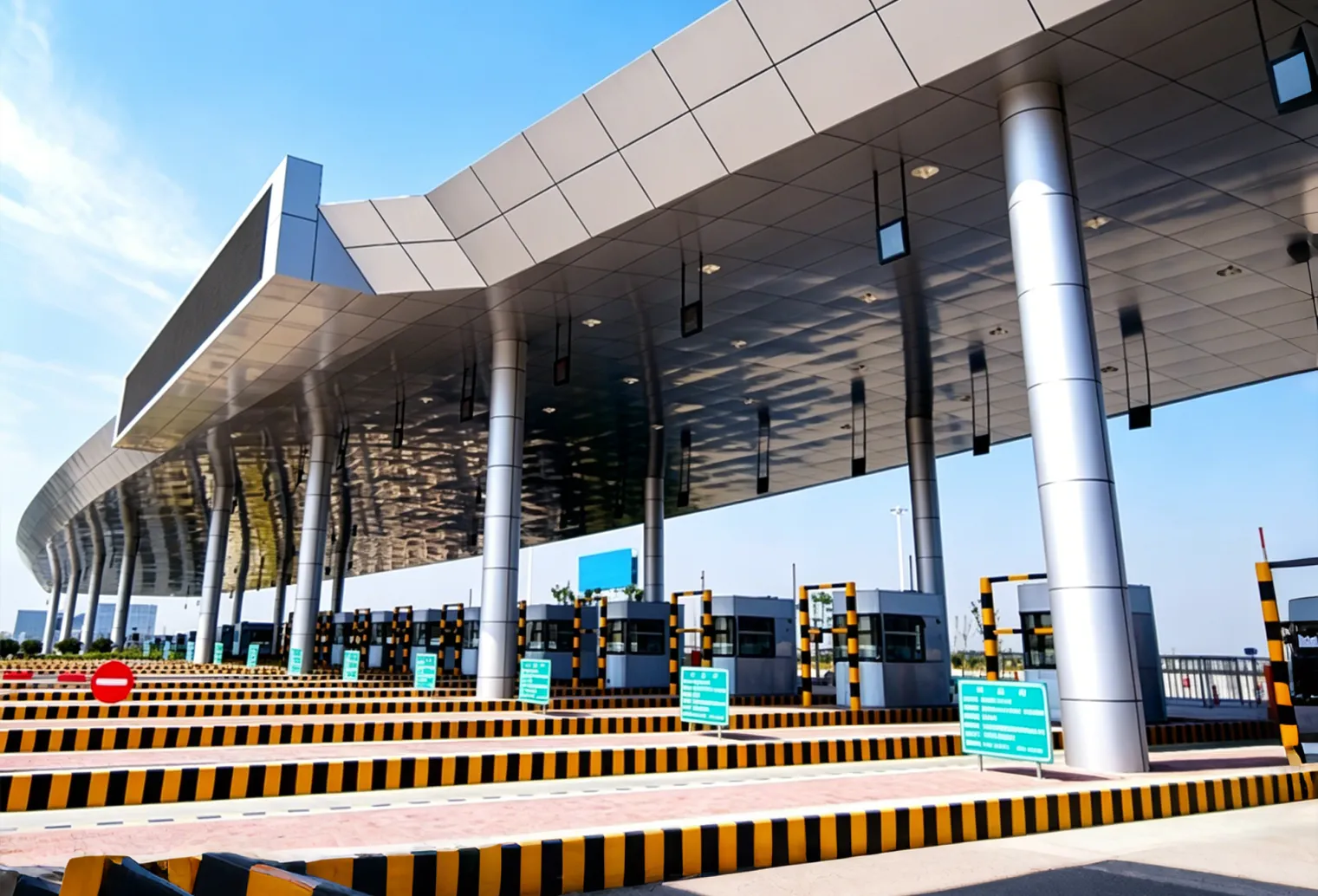
Solution Background and Requirements
Previously, toll collection on expressways in China mainly relied on manual service. With the arrival of the intelligent era, the construction and deployment of intelligent transportation system services have accelerated.
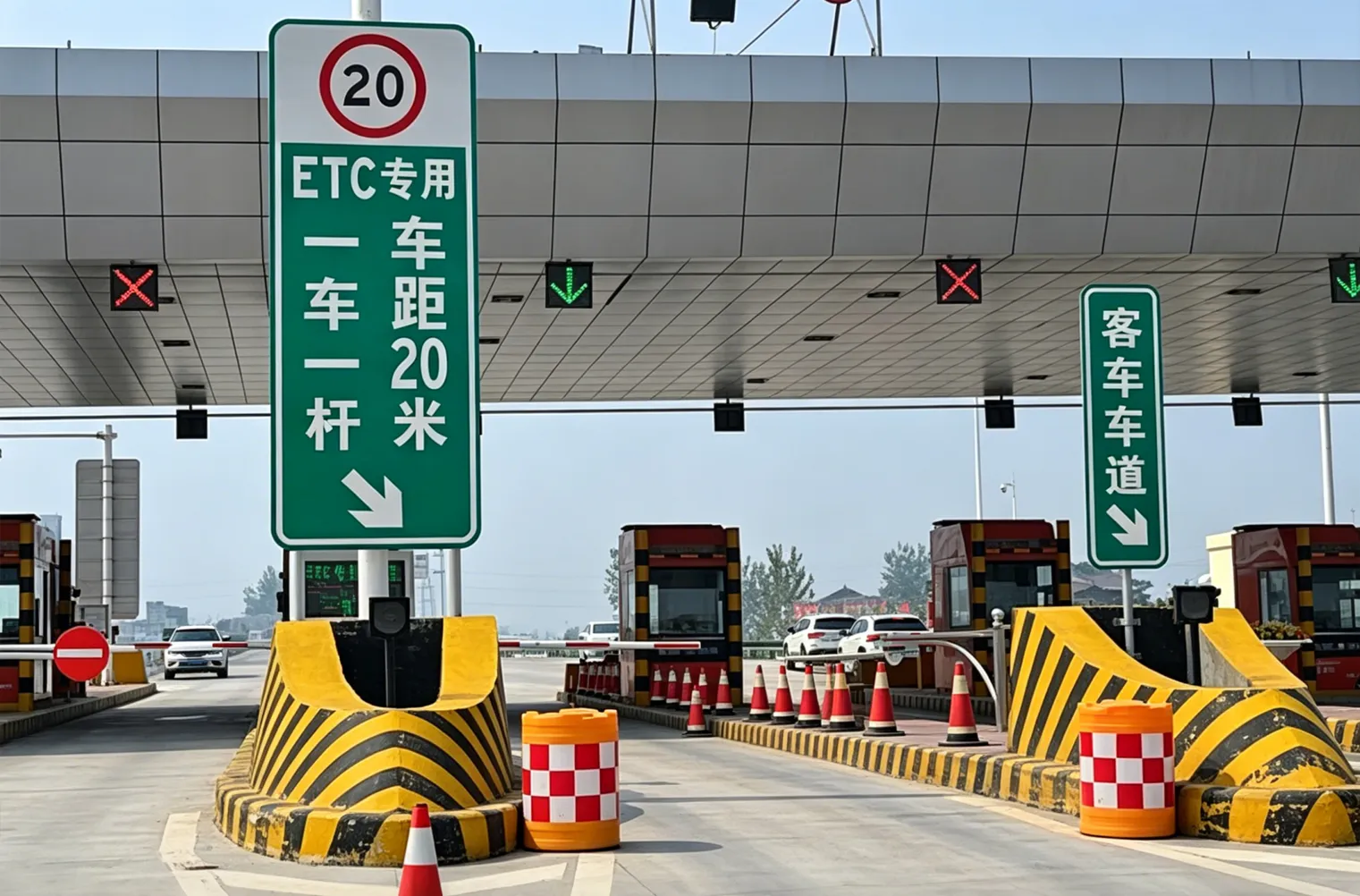
For expressway travel, ETC (Electronic Toll Collection) has been introduced. It is especially suitable for expressways and heavily trafficked bridges and tunnels. At present, dedicated ETC lanes have been set up at expressway toll stations.
When passing through a toll station, drivers no longer need to pay manually or stop their vehicles. Toll fees are deducted automatically from the card, enabling automatic charging. This reduces the number of toll booth staff, lowers staffing and management costs for expressway operators, and improves toll station traffic efficiency by at least five to ten times.
Although the ETC fully automatic electronic toll collection system makes travel faster and more convenient, it can also create problems. If an incident occurs at the toll station, it may quickly lead to confusion. For example, ETC system failures, unsuccessful identification, or vehicle breakdowns may all cause lane congestion.
To solve the communication problem between expressway toll station sites and the expressway management center, the Rongwu Expressway needs to deploy a communication command and dispatch system for coordination and operational communication.
Solution
After learning about the current situation of the Rongwu Expressway, Becke Telcom’s senior business manager proposed the Becke Telcom IP broadcasting, intercom, and integrated dispatch system solution based on the company’s industry experience in the expressway sector. The implementation plan is as follows:
-
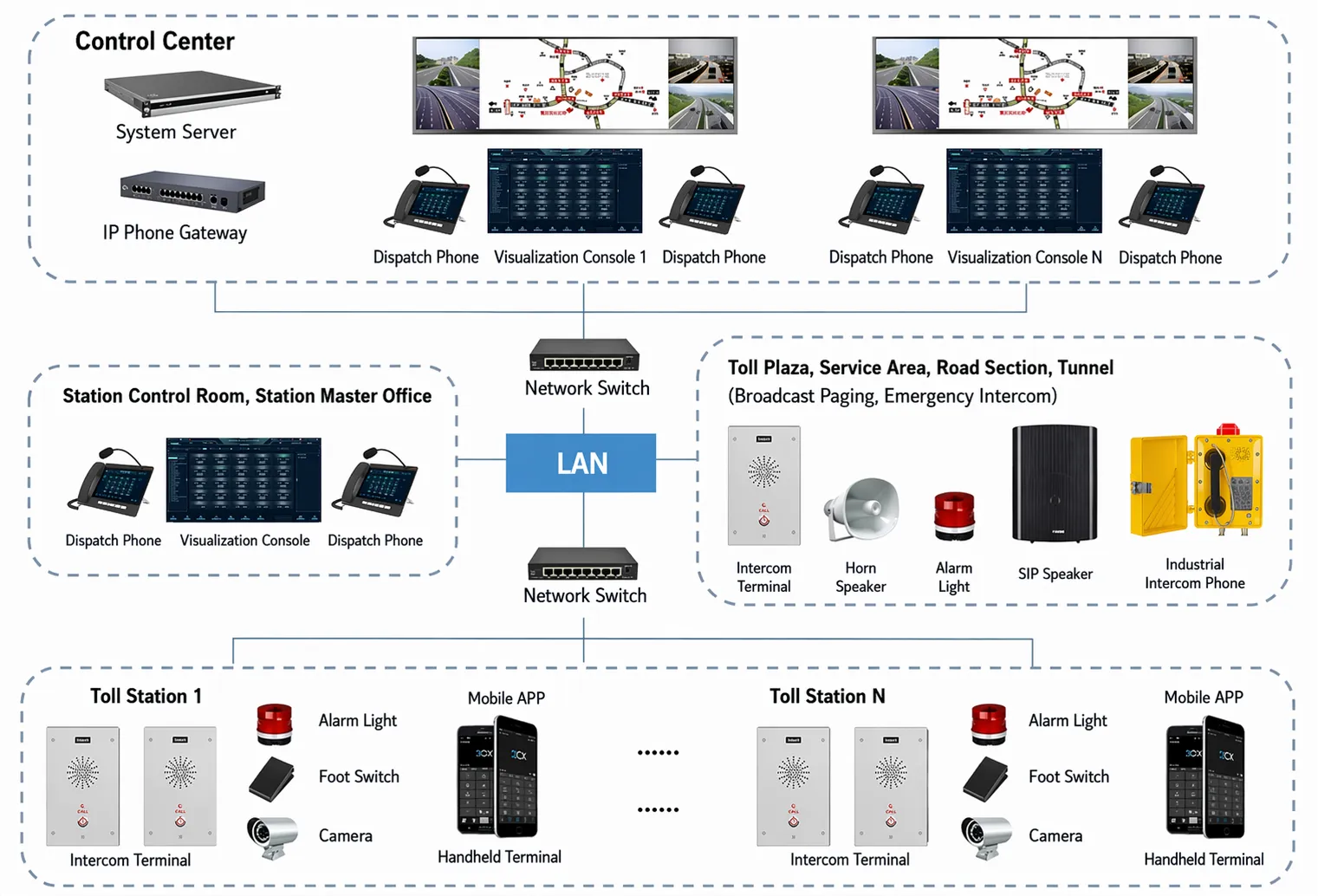
A Becke Telcom IP broadcasting and intercom system is deployed in the central equipment room as the core server of the command and dispatch system, connected to all dispatch terminal devices through the local area network.
-
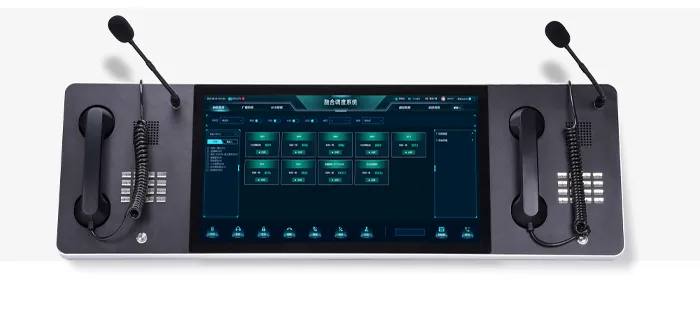
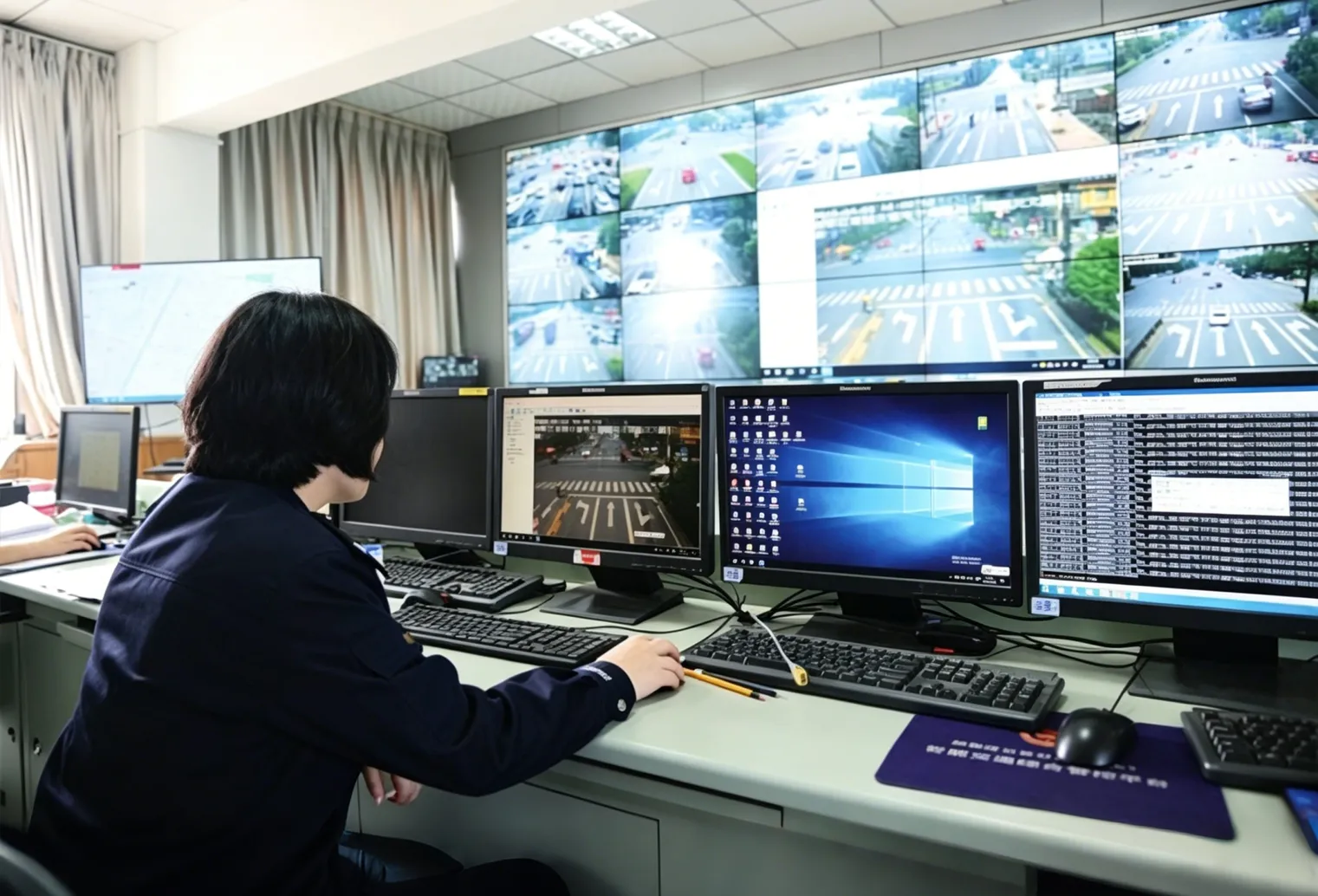
The command and dispatch center is equipped with a touchscreen dispatch console. Through the large display of the dispatch console, the center can conduct direct online video dispatching with expressway toll station sites and perform calling, intercom, live voice paging, and broadcasting functions.
-
Appropriate alarm intercom terminal devices are installed in each toll booth, while various SIP speakers and column speakers are deployed across the toll plaza. All intercom devices and other terminal equipment are connected and registered to the broadcasting and intercom core server through a wireless trunking gateway.
-
Toll booths can establish communication with the command center through one-touch calling. Traffic police at the scene are equipped with handheld intercom devices, and drivers on site can also directly call the expressway command center for assistance through on-site voice intercom equipment.
-
Analog external lines are used for outside connections and are registered to the broadcasting and intercom core server, enabling all-round integrated communication across multiple terminal types.