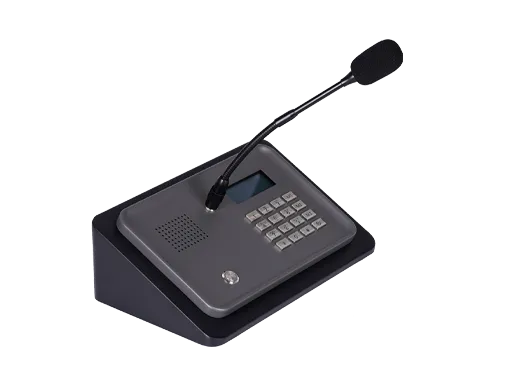
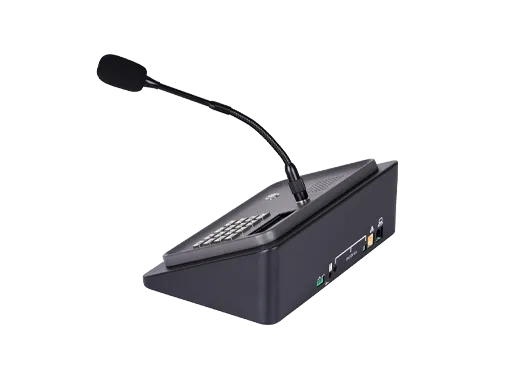
The Becke GP100 is a practical SIP microphone terminal built for users who need fast voice access, clear paging performance, and straightforward integration with modern IP communication systems. Designed for broadcast and talkback use, it combines HD audio, flexible key control, network-based management, and reliable SIP interoperability in a compact desktop form.
For projects that need direct operator interaction rather than a complex console, GP100 provides an efficient balance of usability and function. It supports quick voice announcement workflows, short-key activation, audio output expansion, and stable deployment across a wide range of enterprise and public-service environments.
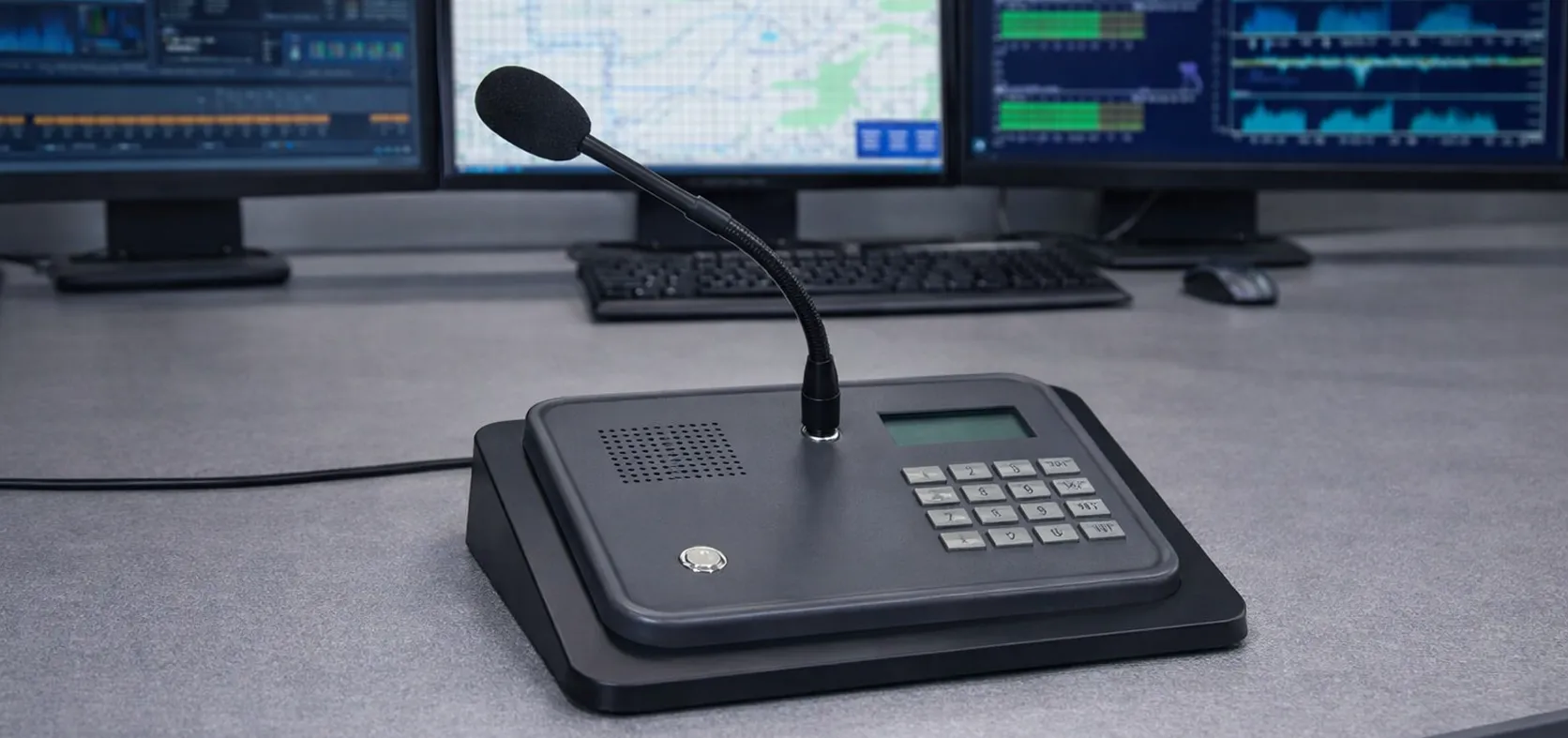
GP100 SIP microphone designed for desktop paging, live announcements, and everyday operator use.
Why GP100 Stands Out
Built for fast, operator-friendly voice workflows
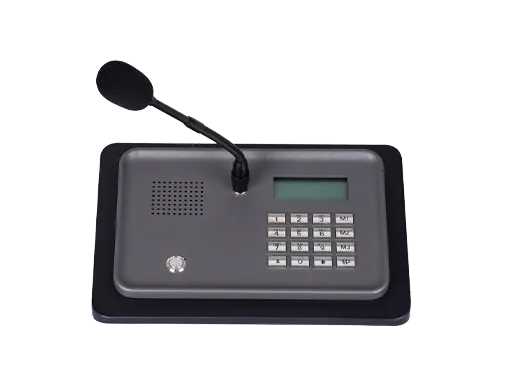
GP100 is designed around practical daily use. The built-in gooseneck microphone supports clear pickup for live paging, while physical keys allow fast access to common functions without slowing down the operator. This makes it suitable for reception desks, control points, duty rooms, and announcement stations where voice actions need to happen immediately.
The terminal also supports three programmable keys, giving integrators and users more flexibility for custom operations such as trigger paging, activate speed-dial targets, launch priority functions, or control linked workflows within the communication system.
Clear audio for real-world paging and talkback
Audio quality is one of the strongest points of the GP100. It supports wideband HD audio with G.722 and includes acoustic echo handling and noise reduction support, helping maintain intelligible speech in typical working environments. Whether it is used for zone paging, dispatch instructions, routine announcements, or help-point talkback, the device is built to keep voice communication understandable and consistent.
An audio output interface is also available for connection to active speakers, making the unit more flexible in local broadcast or amplified desktop announcement scenarios.
GP100 is not just a desk microphone. It is a SIP-based voice endpoint designed to make paging, triggering, and operator communication faster, clearer, and easier to deploy.
Simple network integration for SIP-based platforms
GP100 is compatible with mainstream SIP-based IP PBX, softswitch, and IMS platforms, including environments based on Asterisk, Broadsoft, 3CX, Metaswitch, Elastix, and Avaya. This allows it to fit naturally into existing VoIP architectures without requiring isolated deployment logic.
With dual 10/100 Mbps Ethernet ports, bridge support, and PoE capability, the device is easy to place on desks, counters, and control positions where clean cabling and quick installation matter. It also supports DC input for projects that prefer traditional local power supply.
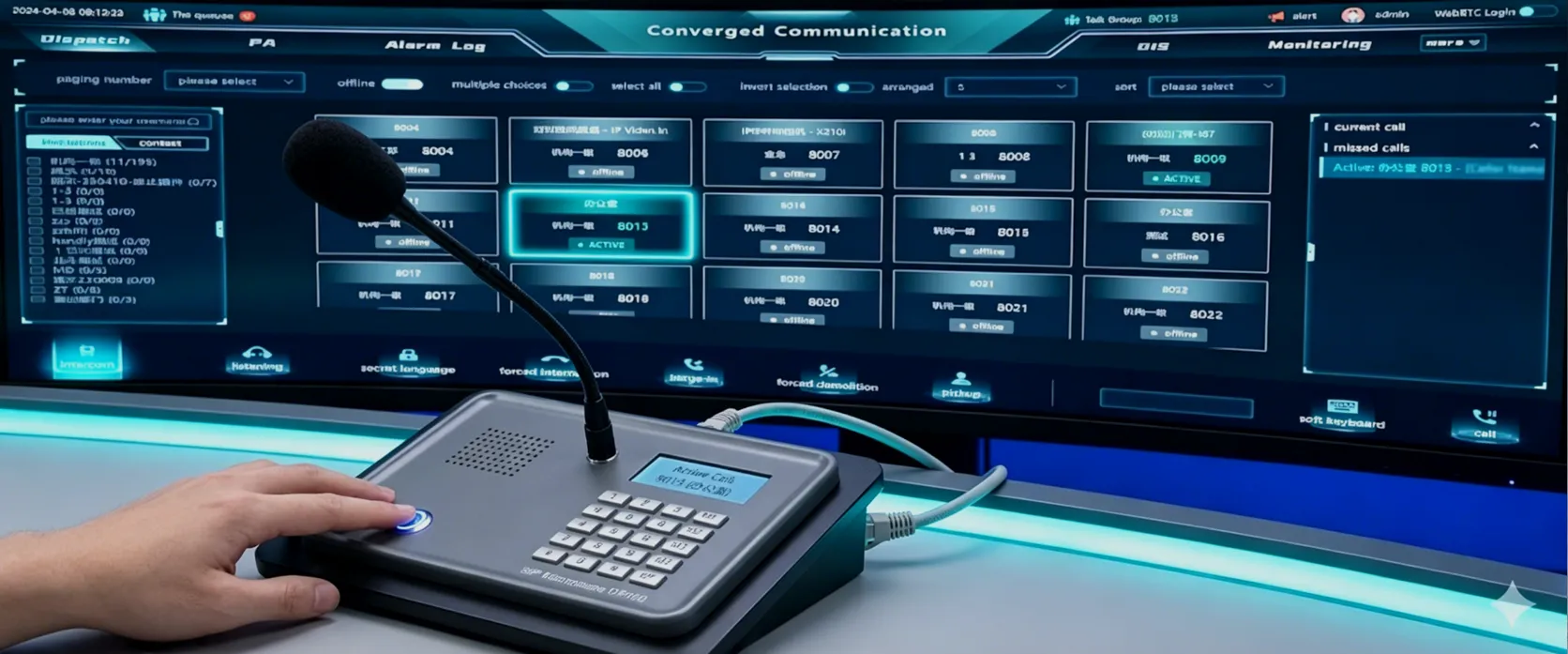
GP100 can be integrated with SIP servers, paging platforms, and local audio equipment for flexible voice workflows.
Functional Capabilities That Add Real Project Value
Everyday communication functions that improve response speed
GP100 supports 2 SIP lines, voice dialing, speed-dial operation, auto answer with separate configuration, voicemail access when supported by the server, and local three-way conference calling. These features give the device more value than a simple paging endpoint, especially in projects where the same operator may need to handle announcements, internal contact, and quick escalation from one position.
The combination of physical control, SIP flexibility, and desktop convenience helps reduce handling time during routine operations and makes the terminal practical for both scheduled and event-driven communication tasks.
Useful control interfaces for system linkage
In addition to voice communication, GP100 includes one short-circuit input and one short-circuit output. This allows the terminal to participate in linked actions such as triggering external devices, integrating with broadcast workflows, or supporting simple event-response logic in broader communication systems.
This is especially useful in projects where voice communication is part of a coordinated response process rather than a standalone audio action.
Easy deployment, provisioning, and maintenance
For integrators and IT teams, GP100 offers a practical management experience. It supports auto-provisioning through FTP, TFTP, HTTP, HTTPS, DHCP Option 66, SIP PnP, and TR-069, making batch deployment and remote maintenance easier in multi-device projects.
Web-based management, packet capture, configuration import and export, firmware upgrade, and syslog support give technicians the tools they need for installation, troubleshooting, and lifecycle support. For networks with stricter control requirements, the device also supports VLAN, LLDP, QoS, and virtual private networking options such as L2TP and OpenVPN.
Application Scenarios
Factories, warehouses, and industrial facilities
GP100 is well suited to industrial environments where staff need a reliable desk-based voice terminal for paging, internal coordination, and routine operational communication. It can be used in workshops, packing areas, logistics zones, loading areas, and facility control points to deliver announcements, contact relevant teams, or trigger local response actions.
Its SIP compatibility also makes it easier to connect with broader industrial communication systems that include IP phones, intercom terminals, speakers, and dispatch servers.
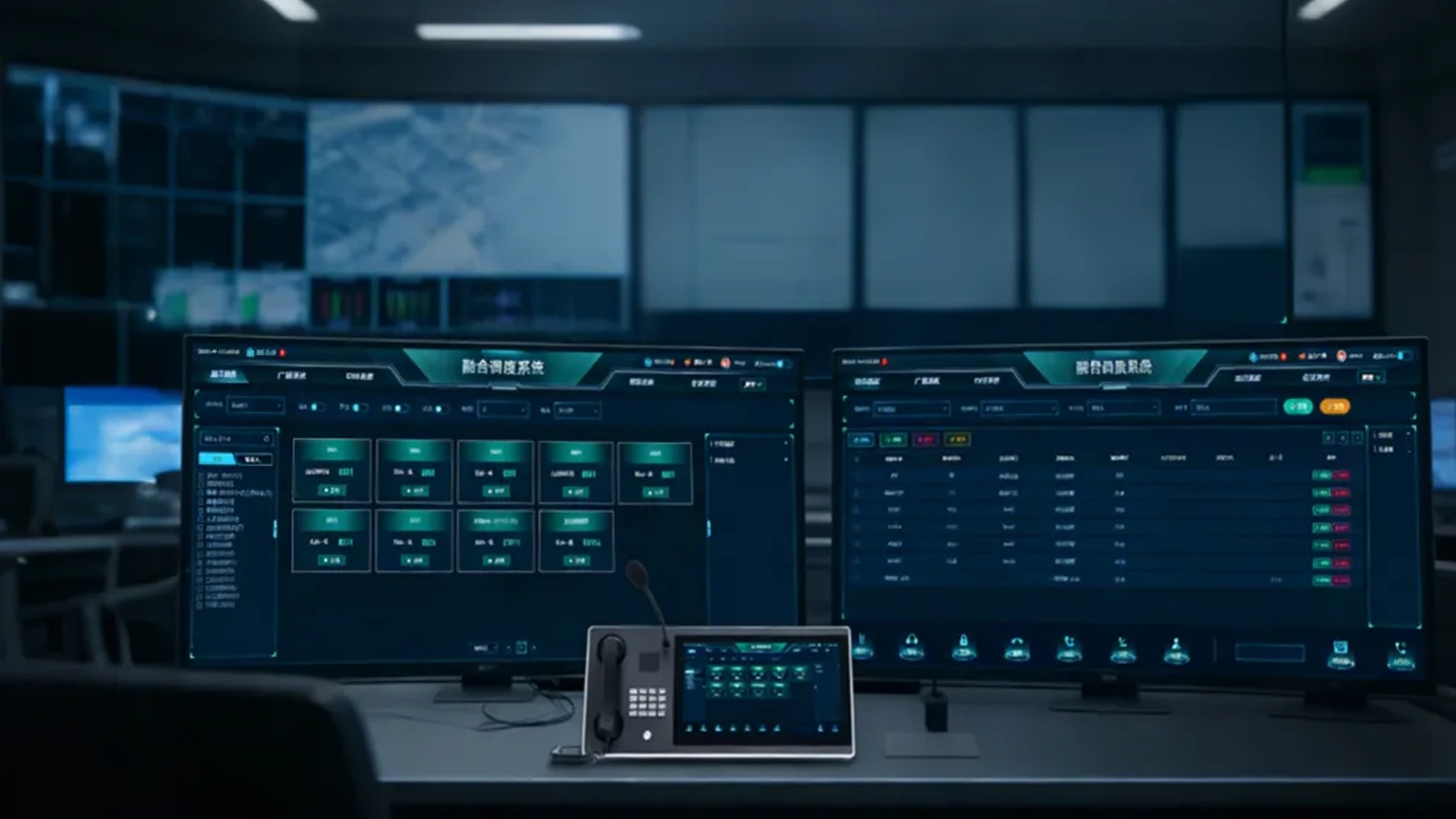
GP100 fits naturally into control rooms, security desks, reception points, and announcement stations.
Campuses, hospitals, and public-service sites
In campuses, medical facilities, office buildings, and public-service environments, GP100 can serve as a practical paging and talkback terminal for reception desks, nurse stations, security counters, service centers, and administration rooms. It supports clear routine announcements while remaining compact and easy to operate.
Because it can be centrally managed and deployed over IP networks, it also works well in projects where multiple desks or service points need standardized voice terminals across different buildings or departments.
Transport hubs, security desks, and command positions
For stations, terminals, gatehouses, monitoring rooms, and similar operational sites, GP100 provides a direct voice interface for dispatch support, call handling, and localized broadcast. The programmable keys can be adapted to workflow priorities, helping staff reach the right targets or functions faster during busy operations.
Where projects require a dependable desktop endpoint instead of a larger dispatch console, GP100 offers a compact but capable alternative for voice-triggered communication.
Key Product Highlights
Built-in gooseneck microphone for direct live paging and talkback
HD wideband audio with G.722 support
Echo handling and noise reduction support for clearer speech
Three programmable keys for customized actions
2 SIP lines for flexible communication use
Short-circuit input and output for external linkage
Audio output for connection to active speakers
Dual Ethernet ports with network bridge support
PoE or DC power input for flexible installation
Broad compatibility with mainstream SIP platforms
Auto-provisioning and web management for easier deployment
Compact Specifications Overview
GP100 uses a 128×48 backlit monochrome dot-matrix display and a desktop design that is easy to place in service and control positions. It supports 10/100 Mbps Ethernet, SIP 2.0 over UDP, TCP, and TLS, plus RTP, RTCP, and SRTP for network audio communication. The device is designed for stable everyday operation in a wide range of indoor working environments.
Conclusion
GP100 is a practical SIP microphone terminal for projects that need dependable desktop paging, clear voice pickup, fast key-based control, and smooth SIP integration. It is especially suitable for organizations that want a compact operator endpoint for announcements, coordination, and triggered voice workflows without moving to a larger console-based system.
With HD audio, flexible interfaces, strong provisioning support, and wide platform compatibility, GP100 delivers real value for paging applications across enterprise, industrial, education, healthcare, transportation, and public-service deployments.
FAQ
1. What is the GP100 mainly used for?
GP100 is mainly used for live paging, voice announcements, talkback, and desk-based operator communication in SIP network environments. It is a strong fit for control rooms, service desks, factories, campuses, and security positions.
2. Can GP100 work with mainstream SIP platforms?
Yes. GP100 is compatible with mainstream SIP-based IP PBX and softswitch platforms, including deployments based on Asterisk, Broadsoft, 3CX, Metaswitch, Elastix, and Avaya.
3. Does GP100 support amplified local audio output?
Yes. It includes an audio output interface that can be connected to an active speaker, which is helpful when stronger local sound reinforcement is required.
4. Is GP100 easy to deploy in multi-device projects?
Yes. GP100 supports multiple provisioning and management methods, including FTP, TFTP, HTTP, HTTPS, DHCP Option 66, SIP PnP, and TR-069, making it easier to deploy and maintain across larger SIP communication systems.
We use cookie to improve your online experience. By continuing to browse this website, you agree to our use of cookie.
Cookies
This Cookie Policy explains how we use cookies and similar technologies when you access or use our website and related services. Please read this Policy together with our Terms and Conditions and Privacy Policy so that you understand how we collect, use, and protect information.
By continuing to access or use our Services, you acknowledge that cookies and similar technologies may be used as described in this Policy, subject to applicable law and your available choices.
Updates to This Cookie Policy
We may revise this Cookie Policy from time to time to reflect changes in legal requirements, technology, or our business practices. When we make updates, the revised version will be posted on this page and will become effective from the date of publication unless otherwise required by law.
Where required, we will provide additional notice or request your consent before applying material changes that affect your rights or choices.
What Are Cookies?
Cookies are small text files placed on your device when you visit a website or interact with certain online content. They help websites recognize your browser or device, remember your preferences, support essential functionality, and improve the overall user experience.
In this Cookie Policy, the term “cookies” also includes similar technologies such as pixels, tags, web beacons, and other tracking tools that perform comparable functions.
Why We Use Cookies
We use cookies to help our website function properly, remember user preferences, enhance website performance, understand how visitors interact with our pages, and support security, analytics, and marketing activities where permitted by law.
We use cookies to keep our website functional, secure, efficient, and more relevant to your browsing experience.
Categories of Cookies We Use
Strictly Necessary Cookies
These cookies are essential for the operation of the website and cannot be disabled in our systems where they are required to provide the service you request. They are typically set in response to actions such as setting privacy preferences, signing in, or submitting forms.
Without these cookies, certain parts of the website may not function correctly.
Functional Cookies
Functional cookies enable enhanced features and personalization, such as remembering your preferences, language settings, or previously selected options. These cookies may be set by us or by third-party providers whose services are integrated into our website.
If you disable these cookies, some services or features may not work as intended.
Performance and Analytics Cookies
These cookies help us understand how visitors use our website by collecting information such as traffic sources, page visits, navigation behavior, and general interaction patterns. In many cases, this information is aggregated and does not directly identify individual users.
We use this information to improve website performance, usability, and content relevance.
Targeting and Advertising Cookies
These cookies may be placed by our advertising or marketing partners to help deliver more relevant ads and measure the effectiveness of campaigns. They may use information about your browsing activity across different websites and services to build a profile of your interests.
These cookies generally do not store directly identifying personal information, but they may identify your browser or device.
First-Party and Third-Party Cookies
Some cookies are set directly by our website and are referred to as first-party cookies. Other cookies are set by third-party services, such as analytics providers, embedded content providers, or advertising partners, and are referred to as third-party cookies.
Third-party providers may use their own cookies in accordance with their own privacy and cookie policies.
Information Collected Through Cookies
Depending on the type of cookie used, the information collected may include browser type, device type, IP address, referring website, pages viewed, time spent on pages, clickstream behavior, and general usage patterns.
This information helps us maintain the website, improve performance, enhance security, and provide a better user experience.
Your Cookie Choices
You can control or disable cookies through your browser settings and, where available, through our cookie consent or preference management tools. Depending on your location, you may also have the right to accept or reject certain categories of cookies, especially those used for analytics, personalization, or advertising purposes.
Please note that blocking or deleting certain cookies may affect the availability, functionality, or performance of some parts of the website.
Restricting cookies may limit certain features and reduce the quality of your experience on the website.
Cookies in Mobile Applications
Where our mobile applications use cookie-like technologies, they are generally limited to those required for core functionality, security, and service delivery. Disabling these essential technologies may affect the normal operation of the application.
We do not use essential mobile application cookies to store unnecessary personal information.
How to Manage Cookies
Most web browsers allow you to manage cookies through browser settings. You can usually choose to block, delete, or receive alerts before cookies are stored. Because browser controls vary, please refer to your browser provider’s support documentation for details on how to manage cookie settings.
Contact Us
If you have any questions about this Cookie Policy or our use of cookies and similar technologies, please contact us at support@becke.cc .