

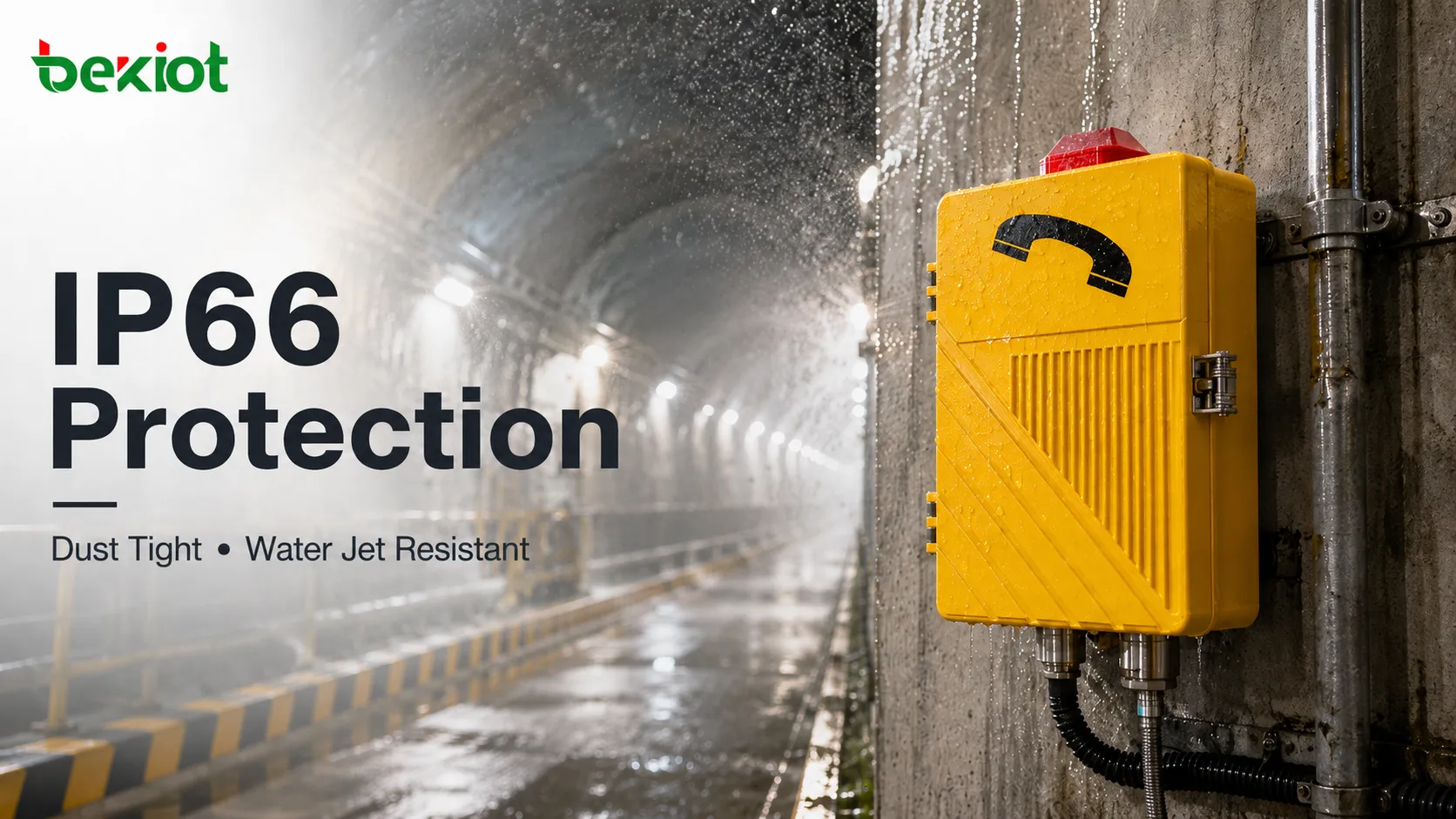
A device installed in a quiet office rarely has to defend itself. A device installed beside a conveyor, on a tunnel wall, near a tank farm, at an outdoor gate, inside a dusty workshop, or along a wet industrial corridor faces a different kind of test every day. Dust settles into small gaps. Rain hits from different directions. Cleaning water may spray across the enclosure. Vibration and temperature changes slowly challenge seals, cable entries, buttons, and joints.
This is why the IP66 protection level is often discussed when selecting outdoor and industrial communication equipment. It does not mean the product can survive every possible environment, but it does indicate strong protection against dust ingress and powerful water jets. For industrial telephones, emergency call points, control panels, and explosion-proof communication terminals, IP66 can be a practical protection level for many harsh sites where ordinary devices would age quickly or fail unexpectedly.
What IP66 Really Covers
IP66 is part of the IP protection rating system used to describe how well an enclosure resists solid particles and water. The first digit, “6,” means dust-tight protection. In practical terms, the enclosure is designed to prevent dust from entering in a way that could affect normal operation. The second digit, also “6,” means protection against powerful water jets from different directions.
This rating is useful because it gives engineers, buyers, and maintenance teams a common language. Instead of describing a device only as “waterproof” or “dustproof,” IP66 provides a more specific protection level. For industrial sites, this matters because vague terms can lead to wrong product selection. A device that looks strong may not be sealed well enough for dust-heavy or washdown conditions.
However, IP66 should be understood correctly. It does not mean continuous underwater operation. It is not the same as IP67 or IP68, which relate to temporary or continuous immersion under defined conditions. IP66 is more suitable for environments where dust and strong water jets are the main concerns, rather than applications where the device will be submerged.
For field communication equipment, this distinction is important. A wall-mounted telephone may face rain, splashing water, cleaning jets, dripping ceilings, or dusty air, but it is usually not expected to work underwater. In that kind of environment, IP66 can be a practical and suitable protection level.
Dust and Spray Are Core Matches
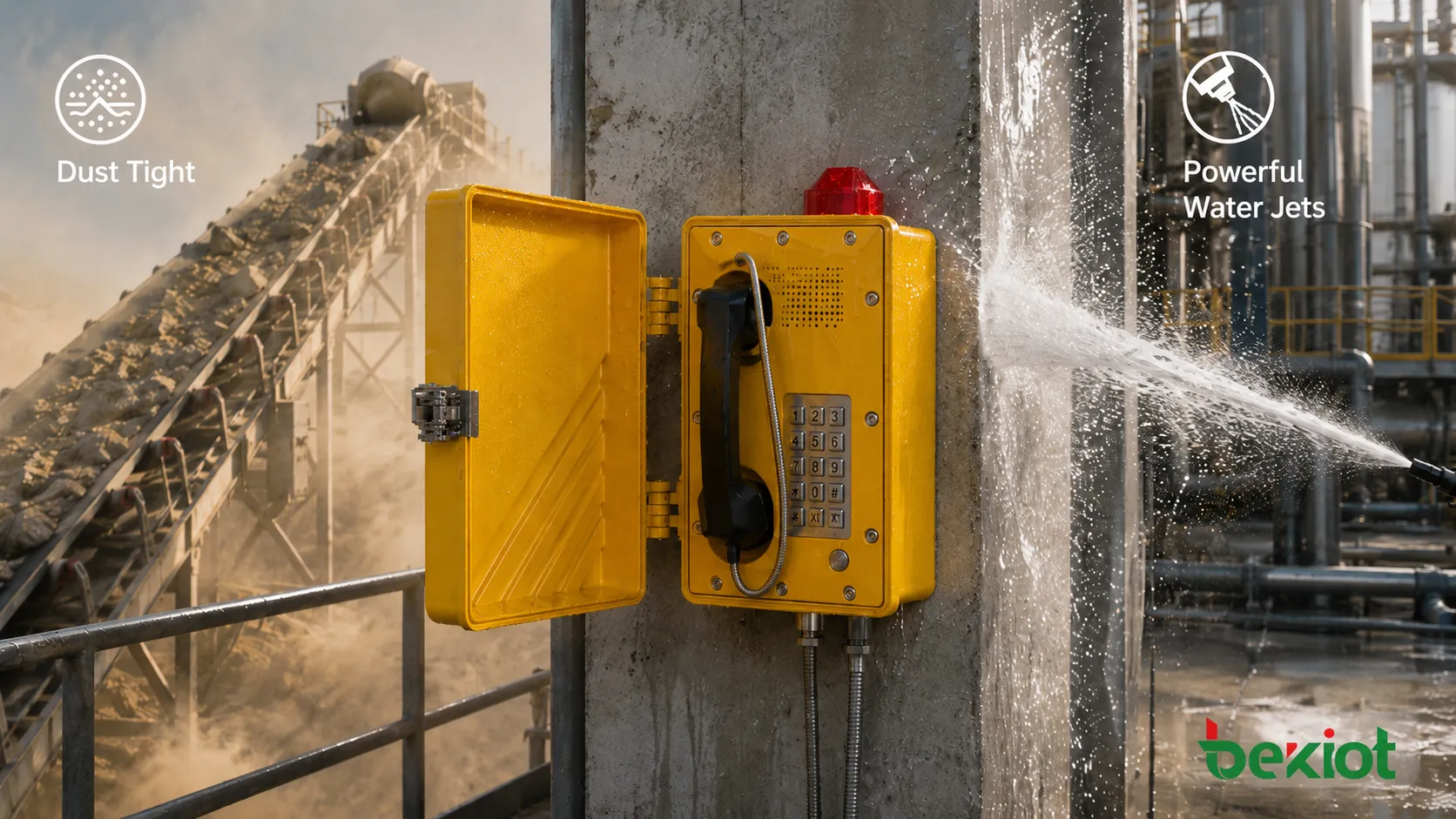
One of the strongest matches for IP66 is a dusty industrial environment. Dust is not only a cleaning problem. Fine particles can enter buttons, speaker openings, microphone paths, terminals, circuit areas, cable entries, and enclosure joints. Over time, dust may affect electrical contact, block acoustic openings, reduce heat dissipation, or combine with moisture to create corrosion and leakage paths.
Mining areas, cement plants, grain processing facilities, steel workshops, coal handling stations, construction tunnels, bulk material conveyors, and powder processing zones may all produce heavy airborne particles. Communication equipment installed in these places must remain usable even when dust is part of daily operation.
An IP66 enclosure helps by providing a dust-tight barrier. For an industrial telephone, this protects not only the internal electronics but also the long-term voice path. A microphone opening blocked by dust may make the field user sound muffled. A contaminated button may become unreliable. A dusty cable entry may become difficult to inspect. Sealing is therefore related to both reliability and communication quality.
The second important match is water spray or washdown exposure. The “6” water protection level is suitable for sites where equipment may be exposed to powerful water jets, stormwater, maintenance rinsing, vehicle washdown, tunnel cleaning, or accidental spray from nearby systems. The concern is not only moisture in the air; it is water hitting the enclosure with force.
Food processing plants, chemical workshops, ports, water treatment facilities, power plants, tunnels, outdoor substations, and heavy industrial yards may all include areas where equipment receives regular or occasional water spray. Ordinary telephones or light-duty terminals may not survive these conditions for long. Water entering the enclosure can damage circuits, corrode terminals, distort audio, or create intermittent faults.
For industrial communication devices, water protection must also cover the practical weak points: handset cable joints, hook switch area, keypad, speaker grille, microphone opening, wall mounting points, and cable glands. If one of these areas is poorly protected, the enclosure rating loses practical value after installation.
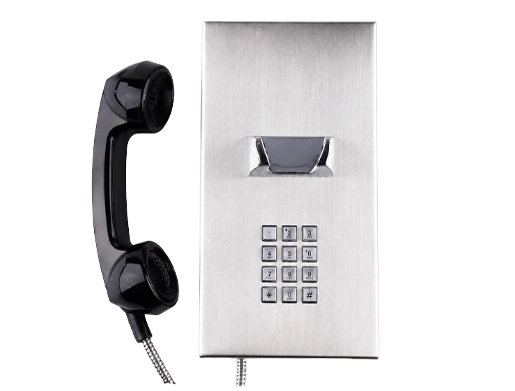
Becke Telcom EX-BH621 explosion-proof telephone, with IP66 protection, can be considered for hazardous industrial areas where dust control, strong water spray resistance, rugged field communication, and protected enclosure design are important. In this type of project, the rating should be reviewed together with explosion-proof requirements, installation method, cable entry, and maintenance access.
Outdoor Exposure Adds Pressure
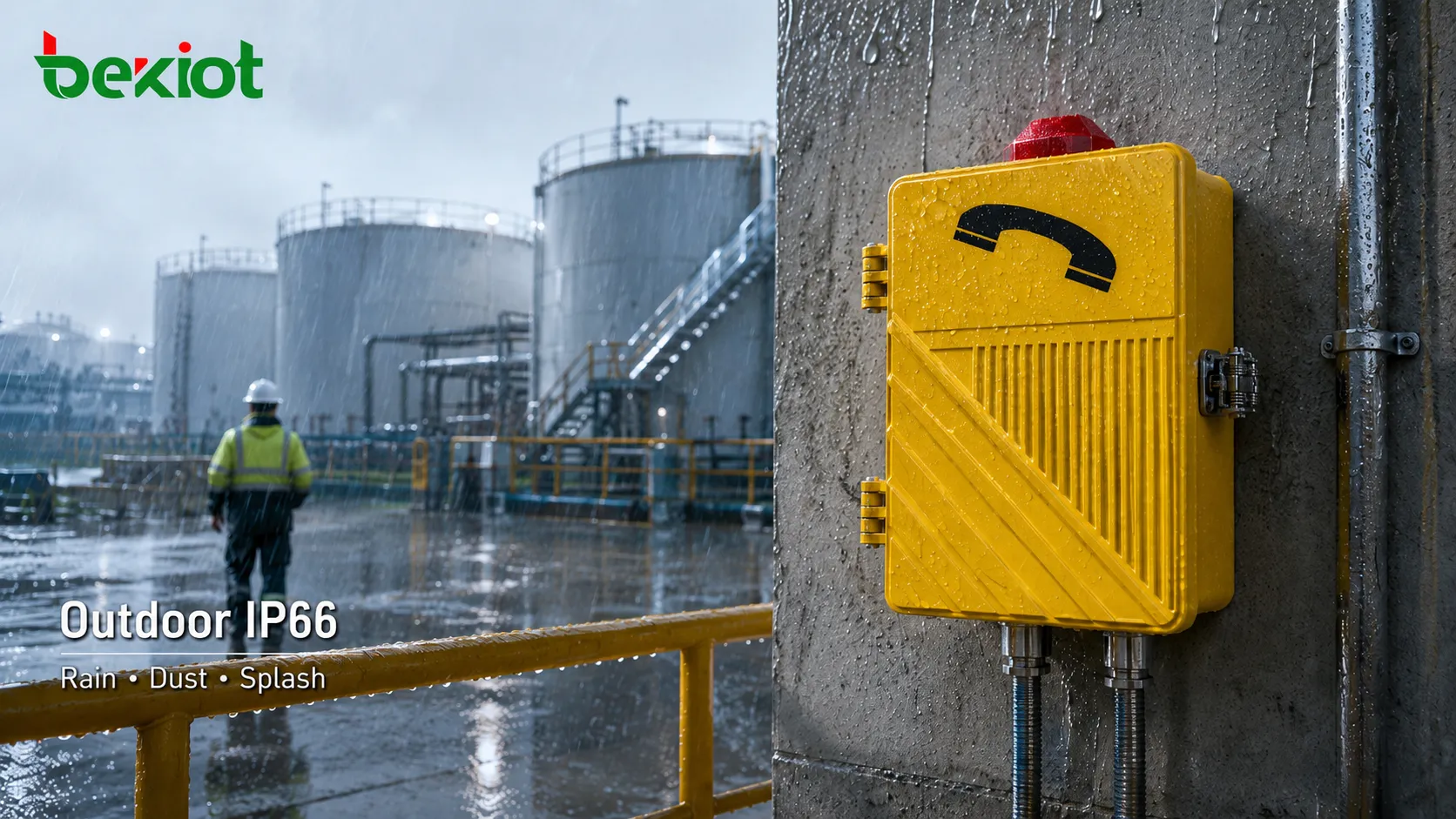
Outdoor industrial environments are another common match for IP66. Rain, wind-driven moisture, dust, temperature changes, sunlight, insects, mud splash, and cleaning water can all affect equipment over time. A communication device installed at a gate, loading bay, storage yard, tank farm, tunnel entrance, parking area, port, or outdoor pump station needs more than basic indoor protection.
IP66 helps protect the enclosure from rain and water spray, but outdoor reliability also depends on materials, surface treatment, cable route, mounting position, and maintenance planning. If an enclosure is sealed but the cable entry is exposed incorrectly, water may still travel along the cable. If the device is installed where water collects behind it, corrosion risk may increase. If it faces direct sun and heat every day, material aging should also be considered.
For outdoor field telephones, users may need to communicate during bad weather. A worker wearing gloves may pick up the handset during rain. The control room may need to call the outdoor point during a fault, inspection, or security event. The enclosure, handset, button, and audio output should remain usable in these conditions.
In emergency and security applications, outdoor communication points may sit unused for long periods. This makes protection even more important. The device must remain ready even if nobody operates it every day. Periodic call testing and visual inspection help ensure that IP66 protection has not been weakened by damage, aging, or improper maintenance.
Limits Depend on Site Risk
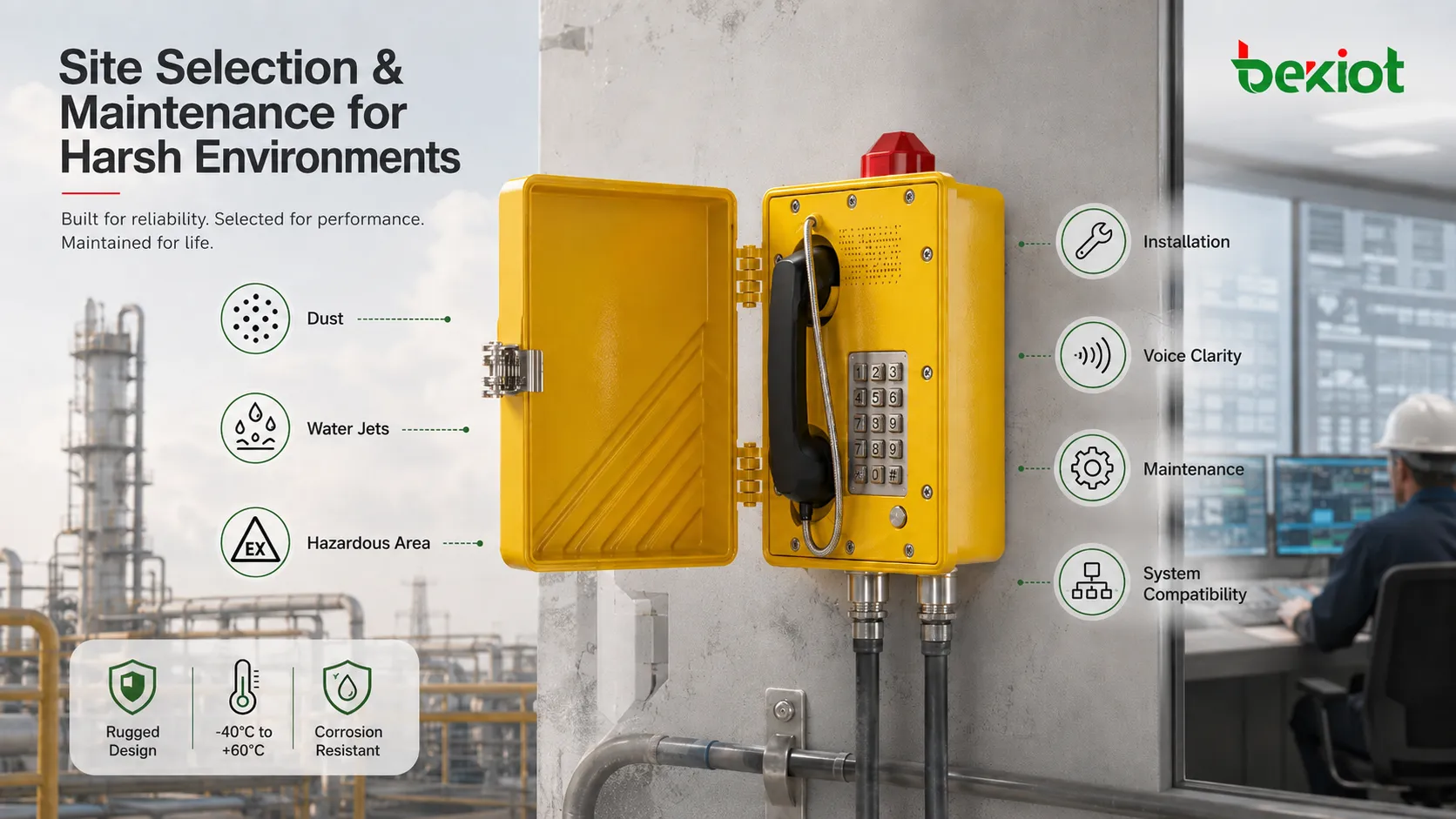
IP66 is strong, but it is not a complete description of environmental suitability. A site may require more than dust-tight and water-jet protection. For example, a hazardous gas area may need explosion-proof certification. A marine or coastal site may need stronger corrosion resistance. A cold region may require low-temperature performance. A high-noise workshop may need stronger acoustic output. A high-vibration machine area may require special mounting and mechanical stability.
This is why IP66 should be treated as one part of the selection process. It tells users something important about enclosure protection, but it does not answer every question. The device must also match the electrical environment, communication protocol, hazardous-area classification, operating temperature, material exposure, impact risk, and maintenance conditions.
In chemical plants, IP66 may help protect against dust and water jets, but chemical vapor or corrosive liquid exposure may require additional material review. In mines, dust-tight protection is valuable, but explosion-proof design, mechanical durability, and cable protection may be equally important. In tunnels, water spray and dust may be present, but echo, noise, and emergency call routing also affect communication performance.
Another limitation is installation quality. A product may be rated IP66, but poor installation can reduce real protection. Loose cable glands, open unused cable entries, damaged seals, incorrect cover tightening, unsuitable mounting surfaces, or unprotected cable routing can all create failure points. Field performance depends on both product design and installation discipline.
The best way to decide whether IP66 is suitable is to begin with the actual site conditions. Engineers should ask what kind of dust is present, whether water jets or washdown cleaning occur, how often rain or spray reaches the device, whether the equipment is indoors or outdoors, and whether it is installed in a hazardous area. These answers shape the selection more accurately than a general statement such as “the environment is harsh.”
Noise level should also be reviewed for communication products. A protected enclosure is not enough if the user cannot hear clearly. In factories, tunnels, mines, ports, and power facilities, the telephone should provide practical voice clarity under normal operation, not only during commissioning. Mounting position, handset design, speaker output, microphone pickup, and system gain settings all influence the final result.
System compatibility is another part of selection. An IP66 industrial telephone may need to connect to SIP platforms, analog lines, dispatch systems, emergency call systems, public address networks, or recording servers. The chosen device should match the existing communication architecture and future upgrade plan.
Final Notes
The IP66 protection level matches many extreme environments where dust ingress and powerful water jets are real risks. It is suitable for dusty workshops, mines, tunnels, outdoor yards, ports, chemical facilities, power plants, water treatment areas, washdown zones, and exposed field communication points. Its main value is protecting the enclosure from dust and strong water impact so the device can remain reliable in harsh conditions.
At the same time, IP66 should not be treated as a universal protection answer. It does not mean continuous immersion, and it does not replace explosion-proof certification, corrosion resistance, impact strength, temperature suitability, acoustic design, or proper system integration. The rating must be matched with the actual site.
For hazardous industrial communication projects that need an explosion-proof telephone with IP66 enclosure protection, Becke Telcom offers the EX-BH621 as a practical option for field voice access in demanding environments. The final selection should consider site risk, dust and water exposure, installation method, communication platform, audio needs, and long-term maintenance requirements.
FAQ
What does IP66 mean?
IP66 means the enclosure is dust-tight and protected against powerful water jets. It is suitable for dust-heavy and spray-prone environments, but it is not intended to describe continuous underwater use.
Is IP66 suitable for outdoor industrial telephones?
Yes, IP66 is commonly suitable for outdoor industrial telephones exposed to rain, dust, wind-driven water, and occasional water spray, provided the device is installed and maintained correctly.
Can IP66 equipment be submerged?
No. IP66 should not be treated as an immersion rating. For immersion conditions, ratings such as IP67 or IP68 are usually considered according to the required depth and duration.
Does IP66 mean explosion-proof?
No. IP66 describes dust and water ingress protection. Explosion-proof suitability depends on separate hazardous-area design and certification requirements.
What should be checked during maintenance?
Maintenance should check cable glands, seals, cover tightness, handset condition, microphone and speaker openings, mounting stability, corrosion, labels, and real call quality.