
stryInsights
2026-07-27 17:30:46
5GC ULI 파라미터와 5G 코어 네트워크의 사용자 위치 보고
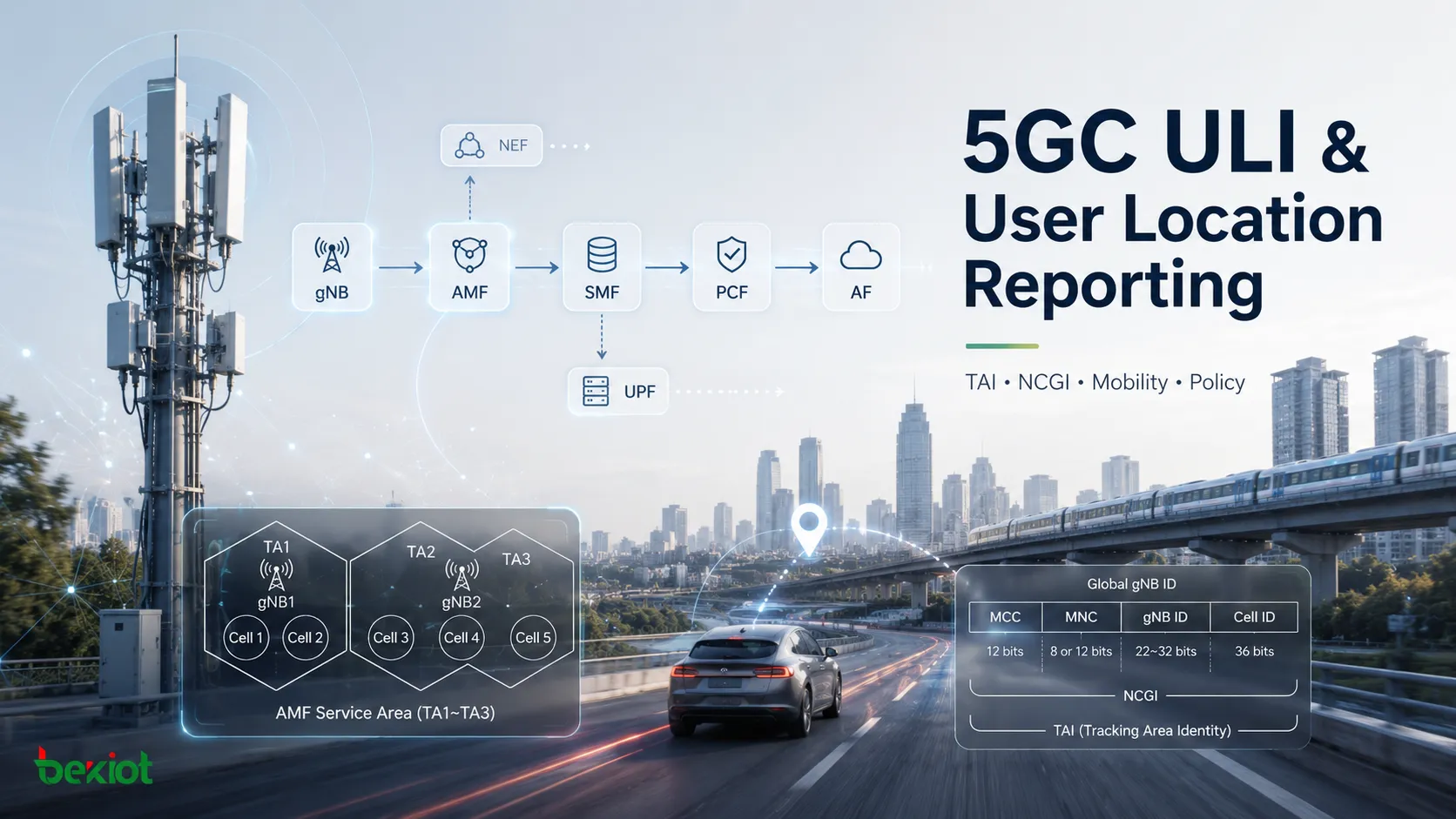
gNB가 보고하는 사용자 위치 정보, NR ULI 구조, TAI, NCGI, NCI, 등록 영역, MRU 발생 조건과 위치 데이터가 AMF, SMF, PCF, NEF 및 애플리케이션 기능으로 전달되는 경로를 통해 5GC ULI를 설명합니다.

Becke Telcom

5GC ULI 파라미터와 5G 코어 네트워크의 사용자 위치 보고

5G 코어 네트워크에서 사용자 위치 정보는 코어 네트워크가 스스로 직접 알아낼 수 있는 정보가 아닙니다. UE의 실시간 네트워크 위치는 무선 접속 측, 특히 사용자를 서비스하는 gNB에서 제공됩니다. gNB는 UE가 어느 셀을 사용하는지, 해당 셀이 어느 추적 영역에 속하는지, 무선 측 위치를 상위 네트워크에 어떻게 보고해야 하는지를 알고 있습니다. 따라서 ULI, 즉 User Location Information은 5GC 신호에서 중요한 파라미터입니다.

ULI는 gNB에서 AMF로 NGAP 신호를 통해 전달됩니다. 코어 네트워크는 이를 통해 등록, 이동성 관리, 세션 처리, 정책 제어, 서비스 라우팅, 애플리케이션 노출에 필요한 위치 기준을 확보합니다. 실제 엔지니어링에서 ULI는 도로 주소 수준의 위치 결과가 아닙니다. TAI와 NR CGI 같은 무선 접속 식별자로 구성되는 네트워크 위치 식별 정보입니다. 이러한 식별자를 통해 5G 코어는 추적 영역과 셀 수준에서 UE의 위치를 파악할 수 있습니다.
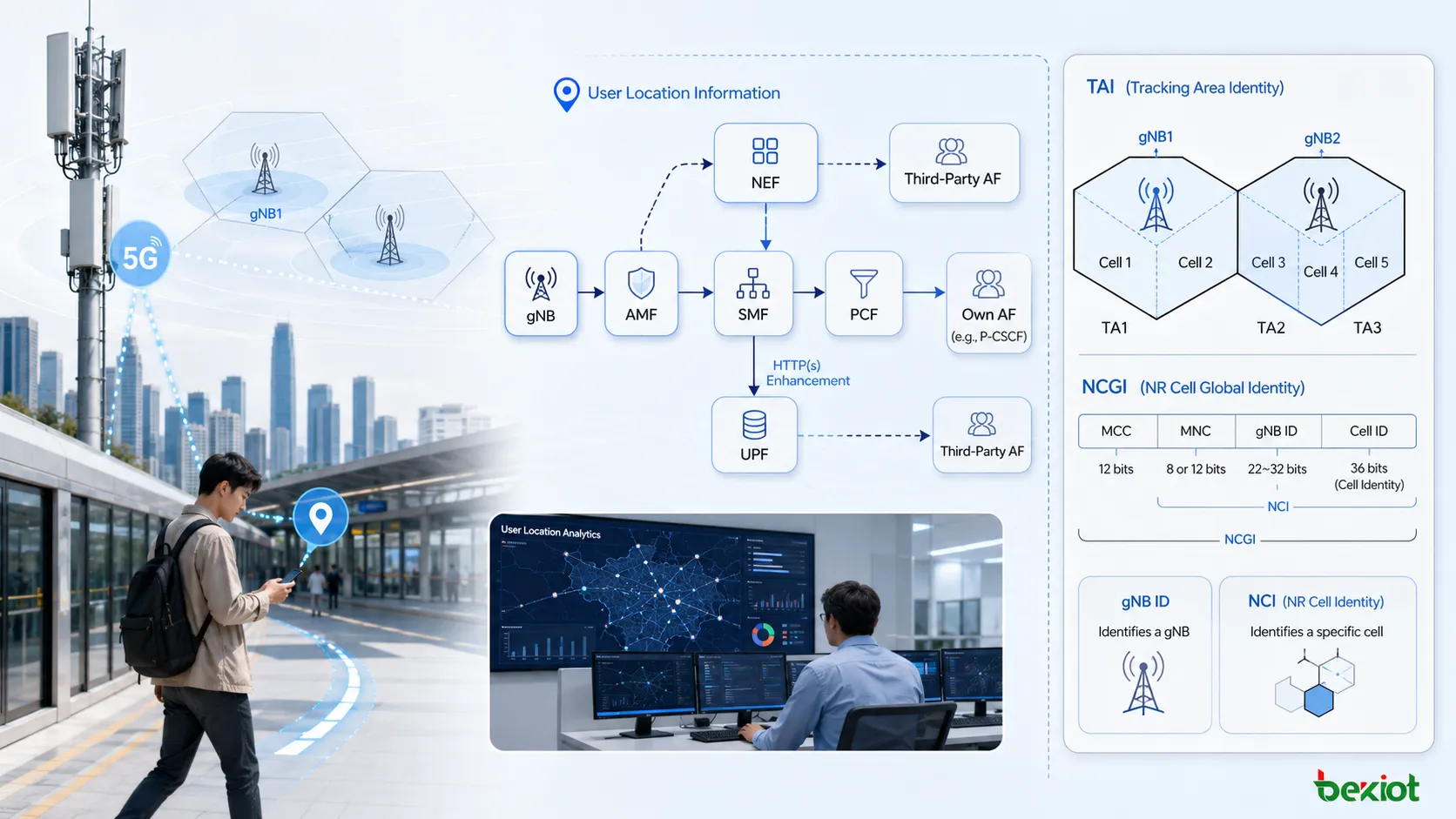
gNB가 TAI와 NR CGI를 포함한 User Location Information을 NGAP 신호로 AMF에 보내는 5GC ULI 보고 구조도
SA 환경에서는 ULI가 주로 TAI와 NR CGI를 사용하여 gNB가 NGAP 신호를 통해 UE 위치 정보를 5G 코어에 보고하도록 합니다.

ULI가 코어에 도달하는 방식

ULI의 보고 방향은 gNB에서 AMF입니다. gNB는 여러 N2 메시지에 ULI 파라미터를 포함하여 AMF가 UE의 현재 네트워크 측 위치를 얻도록 합니다. AMF의 판단은 UE가 어디에 있는지, 어느 추적 영역에 속하는지, 이동성 또는 등록 갱신이 필요한지에 따라 달라지므로 특히 중요합니다.

ULI를 포함할 수 있는 NGAP 메시지에는 PDU Session Resource Release Response, PDU Session Resource Modify Response, PDU Session Resource Notify, UE Context Release Complete, UE Context Modification Response, RRC Inactive Transition Report, Handover Notify, Path Switch Request가 있습니다. NAS 전송에서는 Initial UE MessageUplink NAS Transport가 특히 중요합니다. 이 메시지들이 5G NAS 신호를 전달하므로 AMF는 NAS 관련 절차 중에 UE의 실시간 위치 정보를 얻을 수 있습니다.

이 설계는 위치 보고 로직을 무선 네트워크 가까이에 유지합니다. gNB가 현재 서비스 셀을 관찰하고 관련 식별자를 NGAP로 전달하면, AMF는 그 정보를 더 넓은 이동성 및 세션 컨텍스트의 일부로 사용합니다.

NR ULI의 구성 요소

ULI에는 서로 다른 위치 정보 선택지가 정의되어 있습니다. 크게 보면 NSA 관련 환경에서는 E-UTRA ULI를, SA 관련 환경에서는 NR ULI를 포함할 수 있습니다. 5G 단독 모드 네트워크에서는 NR ULI가 핵심입니다.

NR ULI는 주로 5G TAINR CGI, 즉 NCGI의 두 부분으로 구성됩니다. TAI는 추적 영역을 식별하고, NCGI는 특정 NR 셀을 전 세계적으로 식별합니다. 두 정보를 함께 사용하면 코어 네트워크는 UE의 추적 영역 컨텍스트와 무선 셀 컨텍스트를 모두 알 수 있습니다.

TAI는 MCC + MNC + TAC로 구성됩니다. MCC와 MNC는 PLMN을 식별하고 TAC는 추적 영역을 식별합니다. 이 구조를 통해 네트워크는 UE를 올바른 사업자 네트워크와 추적 영역에 연결할 수 있습니다. 추적 영역은 4G에서 이어진 개념이지만 5G 이동성 관리에서도 여전히 중요합니다.

NCGI는 PLMN 식별자와 NCI로 구성됩니다. NCI, 즉 NR Cell Identity는 36비트이며 gNB ID와 Cell ID를 포함합니다. gNB ID 길이는 가변이므로 Cell ID 길이는 gNB ID에 할당된 비트 수에 따라 달라집니다. 예를 들어 gNB ID가 24비트이면 남은 Cell ID는 12비트입니다. 엔지니어가 셀 식별값을 해석하거나 NCI와 NCGI를 계산할 때 이 관계가 중요합니다.

영역 간 관계

등록 영역, 추적 영역, gNB, 셀의 관계는 5G 이동성을 이해하는 핵심입니다. 하나의 셀은 하나의 기지국에만 속하며 동시에 하나의 추적 영역에만 속합니다. 하나의 추적 영역에는 여러 기지국과 여러 셀이 포함될 수 있습니다. 무선 설계 방식에 따라 하나의 gNB에 속한 서로 다른 셀을 서로 다른 추적 영역에 배정할 수도 있습니다.

AMF 서비스 영역은 여러 추적 영역으로 구성됩니다. 이 서비스 범위 안에서 AMF는 정책에 따라 UE마다 서로 다른 Registration Area를 할당할 수 있습니다. Registration Area에는 하나 이상의 추적 영역이 포함될 수 있습니다. 개념적으로는 4G에서 사용하는 TA List와 비슷하지만 5G 코어 이동성 컨텍스트에 적용됩니다.

Registration Area의 목적은 UE의 도달성을 유지하면서 불필요한 신호를 줄이는 것입니다. UE가 할당된 Registration Area 안에서 이동하면 셀이 바뀔 때마다 이동성 등록 갱신을 발생시킬 필요가 없습니다. 할당된 영역 밖으로 이동하면 MRU, 즉 Mobility Registration Update 절차를 시작해야 합니다.

실제 예로 사용자가 지하철 노선을 따라 이동하는 상황을 생각할 수 있습니다. AMF가 TA1을 포함하는 Registration Area를 할당했고 사용자가 TA1의 gNB에서 TA2의 gNB로 이동하면, 할당된 등록 경계를 넘게 됩니다. AMF가 그대로 유지되더라도 할당된 Registration Area가 변경되었으므로 UE는 MRU를 수행해야 합니다.
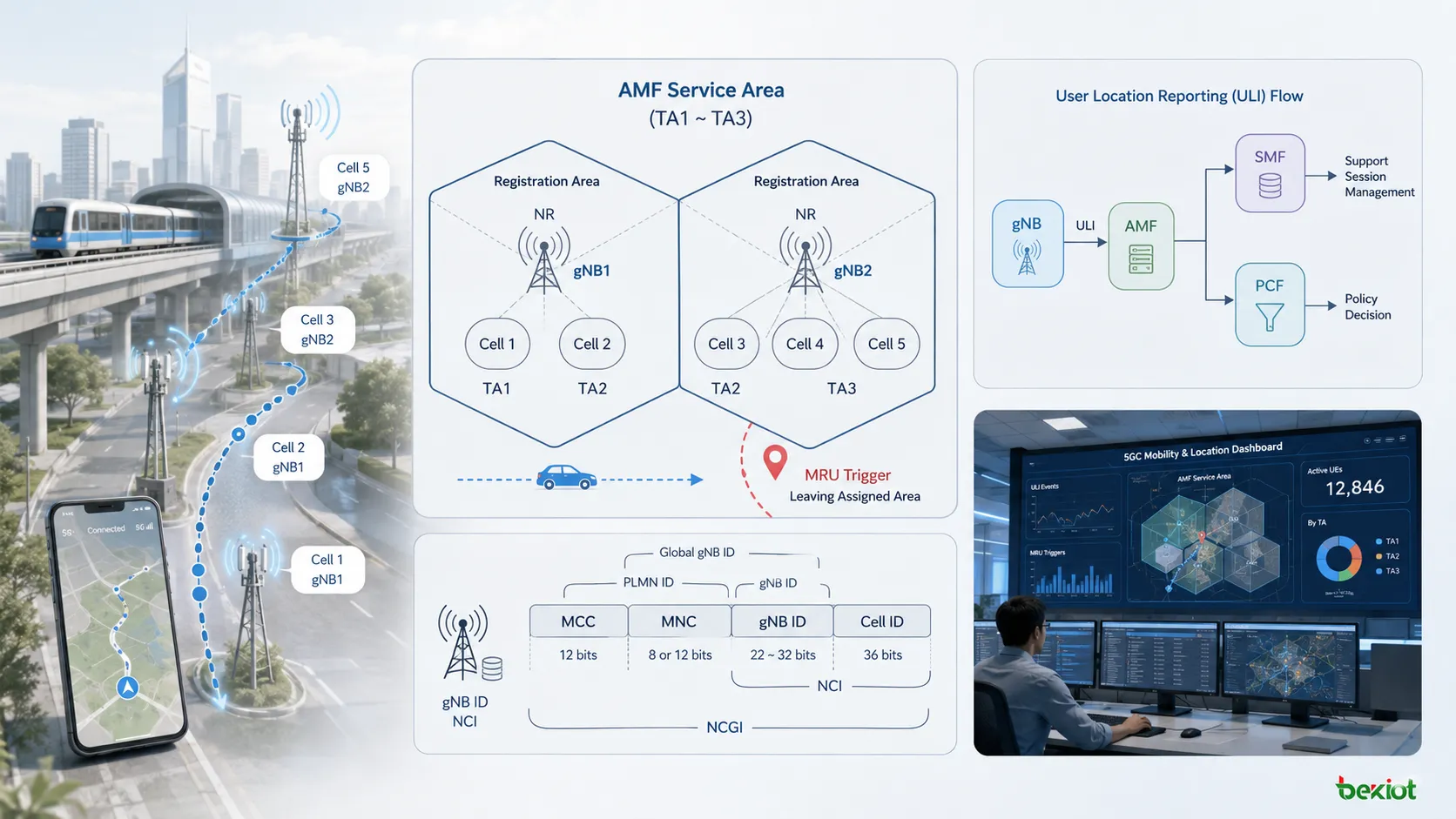
TA, gNB, NR 셀, AMF 서비스 영역과 UE가 지정 영역 밖으로 이동할 때 MRU가 발생하는 관계를 보여주는 5GC 등록 영역 구조도
Registration Area 설계는 TA, gNB, 셀의 관계를 연결하여 UE가 할당된 이동 영역 밖으로 이동할 때만 MRU를 발생시킵니다.

위치 데이터가 전달되는 곳

AMF가 gNB에서 ULI를 받으면 여러 5G 코어 기능이 해당 위치 정보를 사용할 수 있습니다. AMF는 보고된 위치를 가장 먼저 받는 코어 기능입니다. 이후 네트워크 설계에 따라 위치 관련 정보를 세션 관리를 위해 SMF에, 정책 판단을 위해 PCF에, 애플리케이션 연계 기능에 공유할 수 있습니다.

일반적인 신호 경로는 gNB → AMF → SMF → PCF로 이해할 수 있습니다. PCF는 IMS 관련 환경의 P-CSCF와 같이 사업자가 소유한 애플리케이션 기능에 정책 처리를 제공할 수 있습니다. 또 다른 경로에서는 노출 규칙과 서비스 권한이 적용될 때 NEF를 통해 제3자 애플리케이션 기능으로 정보를 노출할 수 있습니다.

ULI 관련 정보는 사용자 평면과 관련된 서비스 노출에도 사용될 수 있습니다. 예를 들어 SMF는 UPF와 연동할 수 있으며 특정 서비스 설계에서는 UPF가 제3자 애플리케이션을 대상으로 HTTP 헤더 정보를 추가할 수 있습니다. 이는 모든 애플리케이션이 자동으로 전체 위치 데이터를 받는다는 뜻이 아닙니다. 5G 아키텍처에 네트워크 측 사용자 위치 정보를 정책, 세션, 애플리케이션 기능이 사용할 수 있는 정의된 경로가 있다는 의미입니다.

기술적 이해와 SEO 관점에서 가장 중요한 결론은 간단합니다. ULI는 gNB에서 시작하여 AMF를 통해 코어로 들어가고, 이후 이동성, 세션, 정책, 서비스 노출 로직에 영향을 줄 수 있습니다. TAI는 추적 영역 위치를 설명하고, NCGI는 NR 셀 식별을 설명하며, Registration Area 로직은 UE가 MRU를 통해 이동 변화를 보고해야 하는 시점을 결정합니다.

자주 묻는 질문

AMF가 UE의 무선 위치를 직접 알 수 없는 이유는 무엇입니까?

AMF는 코어 네트워크 기능입니다. 서비스 셀과 무선 측 위치는 접속 네트워크에서 관찰하므로 AMF는 gNB가 NGAP로 보고하는 정보에 의존합니다.

Initial UE Message와 Uplink NAS Transport가 중요한 이유는 무엇입니까?

이 메시지들은 UE 측에서 AMF로 NAS 신호를 전달하므로 N2 메시지에 포함된 ULI를 통해 AMF는 NAS 절차와 UE의 현재 위치 정보를 연결할 수 있습니다.

gNB ID 길이가 바뀌면 어떻게 됩니까?

NCI는 항상 36비트이므로 gNB ID가 길어지면 Cell ID에 사용할 수 있는 비트가 줄고, gNB ID가 짧아지면 Cell ID에 사용할 수 있는 비트가 늘어납니다.

하나의 gNB가 여러 추적 영역에 속할 수 있습니까?

하나의 gNB에 속한 서로 다른 셀을 서로 다른 추적 영역에 배정할 수 있습니다. 각 셀은 하나의 TA에만 속하므로 셀이 핵심 설계 단위입니다.

MRU가 일상적인 이동성에서 중요한 이유는 무엇입니까?

UE가 할당된 영역 밖으로 이동하면 MRU가 Registration Area 정보를 갱신합니다. 이를 통해 네트워크는 영역 내부에서 과도한 갱신을 발생시키지 않으면서 UE의 도달성을 유지할 수 있습니다.


추천 제품
카탈로그
고객 서비스 전화
We use cookie to improve your online experience. By continuing to browse this website, you agree to our use of cookie.

Cookies

This Cookie Policy explains how we use cookies and similar technologies when you access or use our website and related services. Please read this Policy together with our Terms and Conditions and Privacy Policy so that you understand how we collect, use, and protect information.

By continuing to access or use our Services, you acknowledge that cookies and similar technologies may be used as described in this Policy, subject to applicable law and your available choices.

Updates to This Cookie Policy

We may revise this Cookie Policy from time to time to reflect changes in legal requirements, technology, or our business practices. When we make updates, the revised version will be posted on this page and will become effective from the date of publication unless otherwise required by law.

Where required, we will provide additional notice or request your consent before applying material changes that affect your rights or choices.

What Are Cookies?

Cookies are small text files placed on your device when you visit a website or interact with certain online content. They help websites recognize your browser or device, remember your preferences, support essential functionality, and improve the overall user experience.

In this Cookie Policy, the term “cookies” also includes similar technologies such as pixels, tags, web beacons, and other tracking tools that perform comparable functions.

Why We Use Cookies

We use cookies to help our website function properly, remember user preferences, enhance website performance, understand how visitors interact with our pages, and support security, analytics, and marketing activities where permitted by law.

We use cookies to keep our website functional, secure, efficient, and more relevant to your browsing experience.

Categories of Cookies We Use

Strictly Necessary Cookies

These cookies are essential for the operation of the website and cannot be disabled in our systems where they are required to provide the service you request. They are typically set in response to actions such as setting privacy preferences, signing in, or submitting forms.

Without these cookies, certain parts of the website may not function correctly.

Functional Cookies

Functional cookies enable enhanced features and personalization, such as remembering your preferences, language settings, or previously selected options. These cookies may be set by us or by third-party providers whose services are integrated into our website.

If you disable these cookies, some services or features may not work as intended.

Performance and Analytics Cookies

These cookies help us understand how visitors use our website by collecting information such as traffic sources, page visits, navigation behavior, and general interaction patterns. In many cases, this information is aggregated and does not directly identify individual users.

We use this information to improve website performance, usability, and content relevance.

Targeting and Advertising Cookies

These cookies may be placed by our advertising or marketing partners to help deliver more relevant ads and measure the effectiveness of campaigns. They may use information about your browsing activity across different websites and services to build a profile of your interests.

These cookies generally do not store directly identifying personal information, but they may identify your browser or device.

First-Party and Third-Party Cookies

Some cookies are set directly by our website and are referred to as first-party cookies. Other cookies are set by third-party services, such as analytics providers, embedded content providers, or advertising partners, and are referred to as third-party cookies.

Third-party providers may use their own cookies in accordance with their own privacy and cookie policies.

Information Collected Through Cookies

Depending on the type of cookie used, the information collected may include browser type, device type, IP address, referring website, pages viewed, time spent on pages, clickstream behavior, and general usage patterns.

This information helps us maintain the website, improve performance, enhance security, and provide a better user experience.

Your Cookie Choices

You can control or disable cookies through your browser settings and, where available, through our cookie consent or preference management tools. Depending on your location, you may also have the right to accept or reject certain categories of cookies, especially those used for analytics, personalization, or advertising purposes.

Please note that blocking or deleting certain cookies may affect the availability, functionality, or performance of some parts of the website.

Restricting cookies may limit certain features and reduce the quality of your experience on the website.

Cookies in Mobile Applications

Where our mobile applications use cookie-like technologies, they are generally limited to those required for core functionality, security, and service delivery. Disabling these essential technologies may affect the normal operation of the application.

We do not use essential mobile application cookies to store unnecessary personal information.

How to Manage Cookies

Most web browsers allow you to manage cookies through browser settings. You can usually choose to block, delete, or receive alerts before cookies are stored. Because browser controls vary, please refer to your browser provider’s support documentation for details on how to manage cookie settings.

Contact Us

If you have any questions about this Cookie Policy or our use of cookies and similar technologies, please contact us at support@becke.cc .